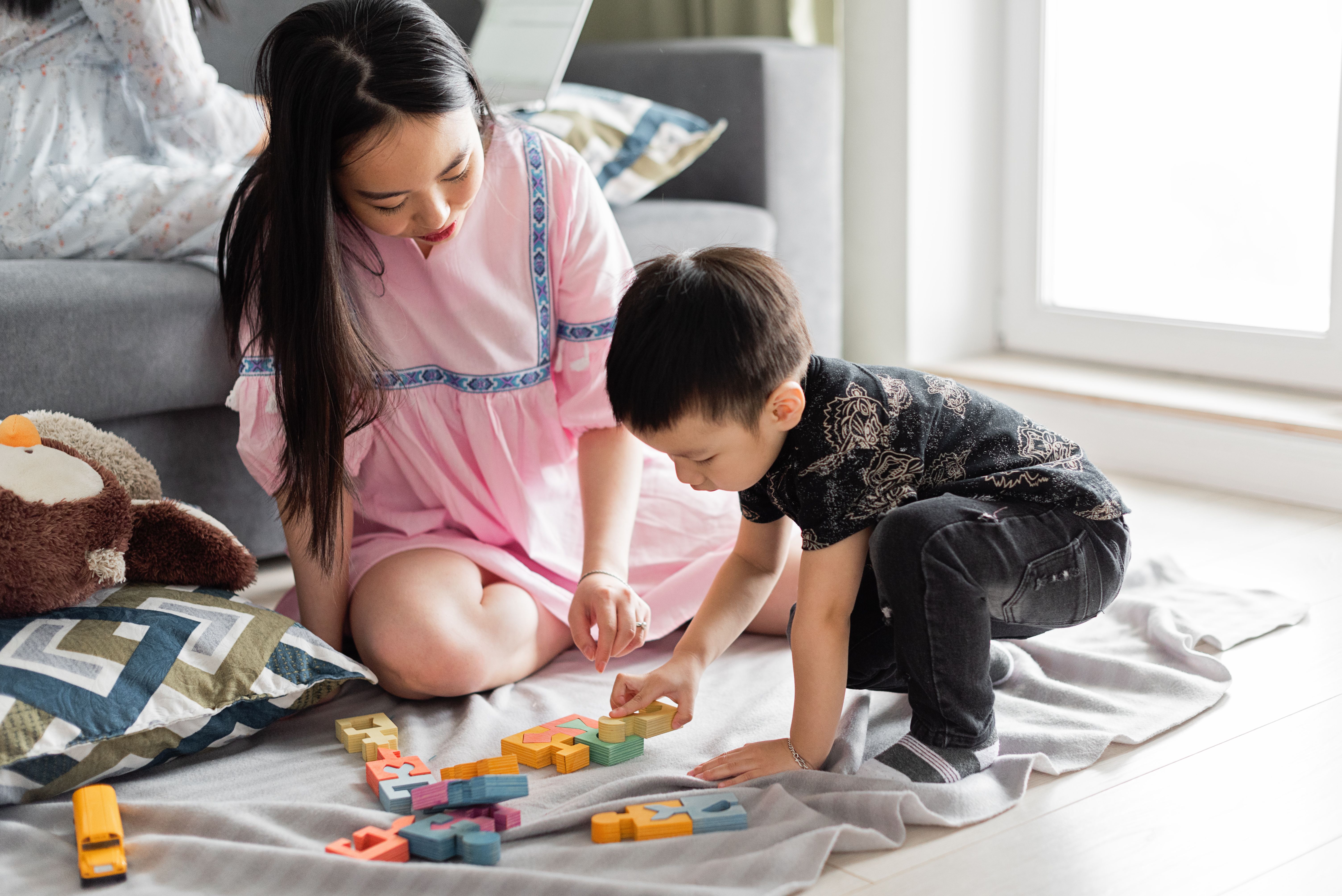
Growing up with two languages does not cause a language disorder. Bilingual children may distribute vocabulary across languages, use one language more strongly in one setting, or mix languages within the same conversation. Those patterns can be part of normal bilingual development.
Look at the whole communication system
A child who knows “dog” in English and the equivalent word in another language still knows the concept. For bilingual children, vocabulary and language skills are best considered across all of the languages they hear and use rather than judging only one language in isolation.
What can be a reason to ask for an evaluation?
- Difficulty understanding everyday language across languages.
- Very limited growth in vocabulary or sentence length over time.
- Difficulty communicating needs even with familiar people.
- Loss of previously acquired communication skills.
- Speech that is much harder to understand than expected for age.
How parents can support bilingual development
Use the language that feels most natural and connected for your family. Rich conversation, shared book reading, songs, play, and everyday routines all provide language learning opportunities. Parents do not need to switch to a less comfortable language in order to “prevent” delay.
This information is educational and does not replace an individualized evaluation by a qualified professional.