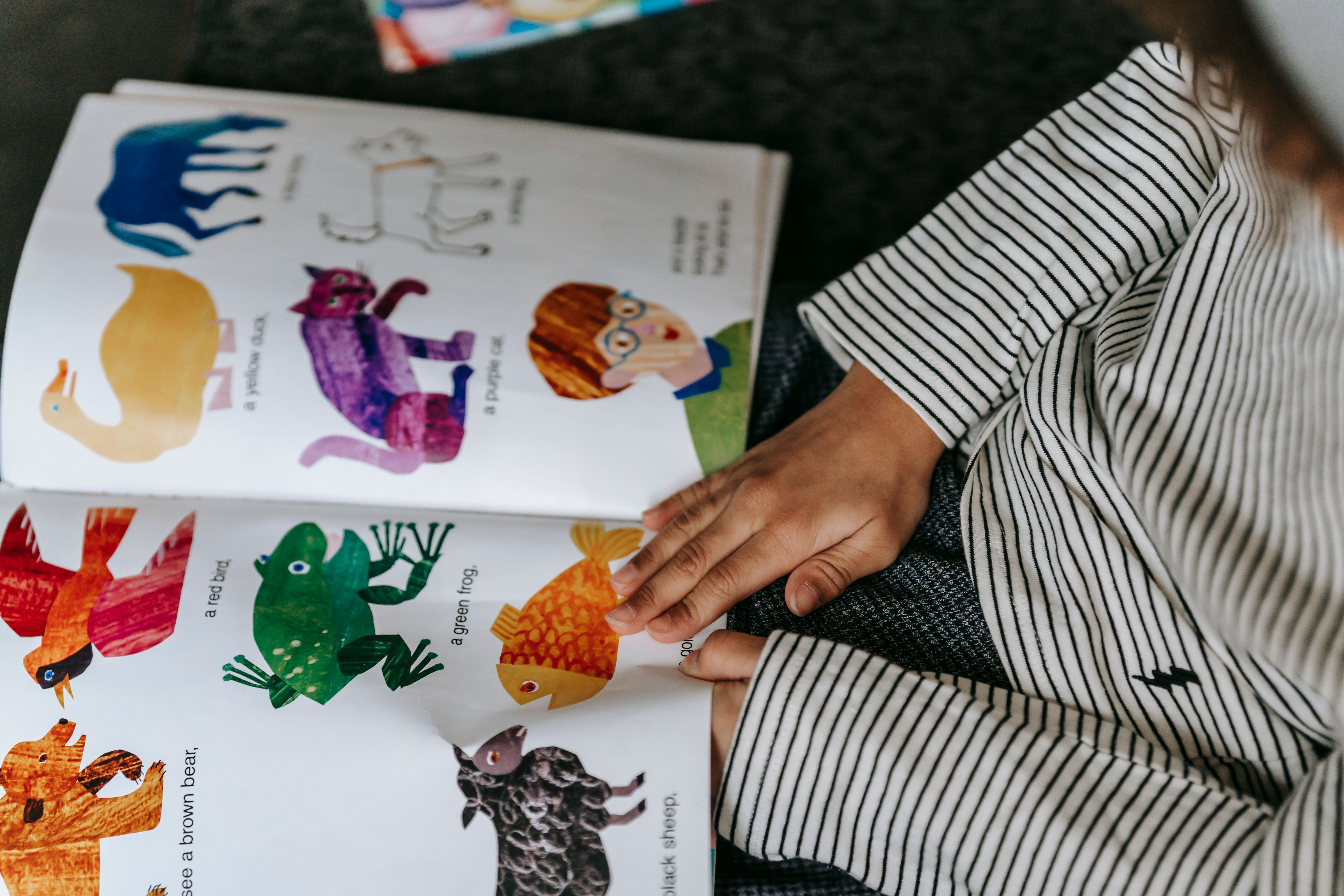
The “best” book for language development is not necessarily the book with the most words. Books work well when they invite interaction.
Look for clear, interesting pictures
Pictures that show familiar actions and objects give children something concrete to point to, label, and discuss.
Repetition is useful
Predictable phrases allow children to participate before they can produce long sentences independently.
Choose books that match the child’s level
For early communicators, simple lift-the-flap books, action books, and repetitive stories can work well. Older children may benefit from books that support prediction, describing, emotions, perspective taking, and story retell.
Do not worry about finishing the book
Pause, comment, follow the child’s attention, and expand what the child says. A five-minute interactive reading experience can be more useful than rushing through every page.
This information is educational and does not replace an individualized evaluation by a qualified professional.