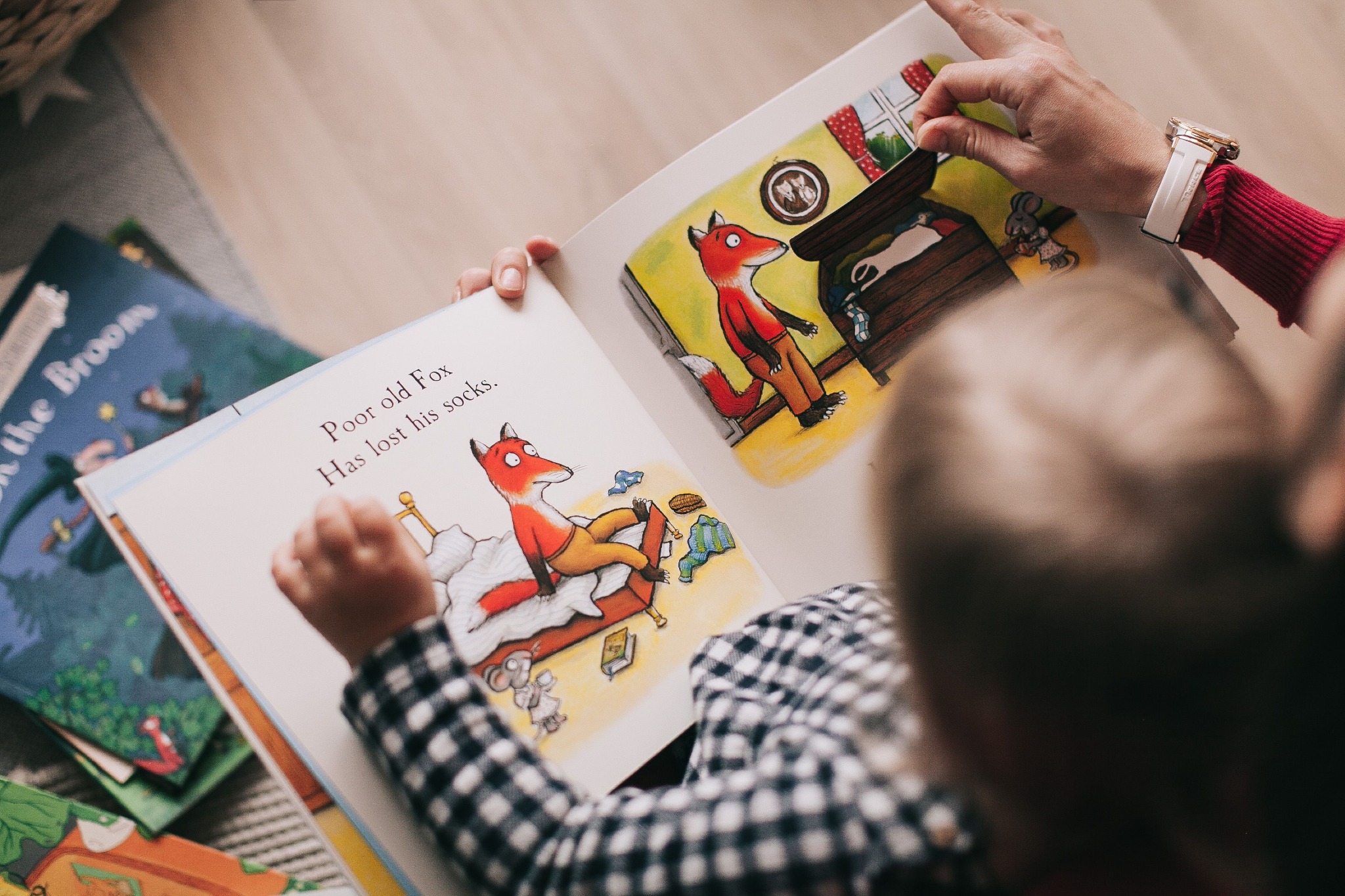
It's almost unbelievable that as soon as you give birth to your baby, they start to communicate with you through glances, sounds, and touches. Babies quickly learn about the world through their senses.
Your baby will be curious about noises, but none more so than the spoken voice. Talk to your baby whenever you have the chance. Even though your baby doesn't understand what you're saying, your calm, reassuring voice conveys safety.
Make sure to say beautiful words because children begin to babble from around the age of six months and say their first words between ten and 15 months (most start speaking at about 12 months). They then begin to pick up increasing numbers of words and start to combine them into simple sentences after around 18 months.
SPEECH VS. LANGUAGE
Developmental speech and language disorders are a common reason for speech/language problems in kids. These learning disorders are caused by the brain working differently. Your child may have trouble producing speech sounds, using spoken language to communicate, or understanding what other people say.
Speech Disorder
A speech disorder is a condition in which a person has problems creating or forming the speech sounds needed to communicate with others. This can make the child's speech difficult to understand. Children with language disorders can produce sounds, and their speech can be understood.
There are many possible causes of speech disorders, including muscle weakness, brain injuries, degenerative diseases, autism, and hearing loss. Speech disorders can affect a person's self-esteem and overall quality of life.
Language Disorder
Language disorder in children refers to problems with either of the following:
- Getting their meaning or message across to others (expressive language disorder)
- Understanding the message coming from others (receptive language disorder)
Your child needs a speech therapy if:
- Not babbling at age 4-7 months - It is unusual for a baby to be quiet and isn't creating sounds like babbling.
- Lack of gesturing - If your child does not make gestures such as pointing and waving (or makes very few gestures) at the age of 7-12 months, that could be another indication of a possible language disorder.
- Issues with a verbal request - Children between 12 and 24 months old should be able to comprehend simple spoken requests, according to KidsHealth. If your child has difficulty following simple instructions, that could be a language development issue.
- Not speaking in sentences - Between the ages of 1.5 to 2 years, kids should start speaking in a form of a sentence. If your toddler is struggling to make sentences, that might be a good reason to get evaluated.
- Trouble making certain sounds - Majority of the time from 1 to 2 years old and/or trouble pronouncing k, g, f, t, d, and n from 2 to 3 years old, according to ASHA. Their speech might also just seem generally unclear and hard to understand when they are 2 to 3 years old.
If your child shows any of these signs or seems to have other speech and/or language issues, it’s best to seek help as soon as possible.
A child should be referred for a speech toddler speech evaluation if he or she has the following symptoms: Struggles to imitate the sounds made by others. The variety of sounds a child makes decreases instead of increases. Makes only a few or poor quality sounds.
Kids might need speech-language therapy for many reasons, including hearing impairments. cognitive (intellectual, thinking) or other developmental delays.
By age 2, most children understand more than 300 words. If your child has trouble understanding simple sentences, such as “put on your shoes,” it may be time to see a speech therapist but will have to undergo toddler speech evaluation first.
Your toddler should see a speech therapist if they are:
- Talking very little or not talking at all.
- Using only single words.
- Having trouble following simple directions.
- Difficult to understand.
- Repeating words or parts of words when talking.
FIRST STEP TO SPEECH THERAPY IS SPEECH EVALUATION
Here’s how toddler speech evaluation works. The speech therapist will make a note of whether the voice sounds hoarse; he'll also check for nasality, resonance, and the flow of speech. He will likely perform a physical exam of the palate, tongue, and lips. H will also assess how well your child moves his tongue and lips. Your child may be asked to make the “aahh” sound.
The speech therapist may interact through talking and playing, and using books, pictures other objects as part of language intervention to help stimulate language development. Model correct sounds and syllables for a child during age-appropriate play to teach the child how to make certain sounds.
HOW DOES SPEECH THERAPY WORK?
Speech therapy is a treatment for problems with speaking, language, and swallowing. It is given by a speech therapist, also called a speech-language pathologist. Speech therapy helps with using the voice properly and using the muscles to make the right sounds. It helps people understand language and express themselves.
Speech Therapy Online is Proven to Work Just as Well as Traditional Speech Therapy
Essential Speech Therapy Activities & Techniques
- Sensory Feedback - One essential speech therapy technique is the use of sensory feedback. Quite simply, it helps your child to become more aware of the sounds that he is producing and how he is producing them. For example, the SLP might use auditory feedback. She might record a sample of your child’s vocalizations and play them back. She would then play a recording of the same sounds, pronounced correctly so that he can hear the difference. Your child can also benefit from visual feedback or watching himself or others produce sounds.
- Articulation Speech Therapy Activities - Your child’s speech therapist will use other speech therapy activities for the articulation to help him pronounce certain sounds. The SLP might clearly state a word and ask that your youngster repeat it. This will be done multiple times to give your child plenty of practice.
- Oral Motor Therapy Techniques - Some speech disorders are characterized by poor manipulation of the oral motor muscles. This can not only interfere with your child’s speech, but his swallowing and feeding abilities as well. Oral motor exercises and facial massage may be used to improve muscle tone. The speech therapist might also work on introducing foods of various textures and temperatures in order to raise oral awareness. Oral motor therapy techniques typically emphasize speech therapy activities that pair movements with sounds.
- Language Intervention - Speech and language disorders can not only impact a child’s ability to articulate clearly, but also his ability to understand language and express himself appropriately. Some kids might have trouble putting their thoughts into words, following or giving directions, or narrating a story. Your child’s SLP will encourage language acquisition by using books, role-play games, and similar speech therapy activities. Your child might work on building complete sentences, acquiring new vocabulary, or telling a story with a beginning, middle, and end.
You might be wondering why does your child need speech therapy:
The job is not limited to the speech therapist. As parents, you will also need to work directly with children to support them in their speech, language, and communication development. This can include working with them within the family at home. A child's individual needs, providing training and giving advice on how to provide a language rich environment to support language development.
CAN WE PERFORM SPEECH THERAPY AT HOME?
Unfortunately, the evaluation process can take a few months and some children may not qualify at all. Even when a child is enrolled in speech therapy, home practice can increase the effectiveness of that therapy. For these reasons, parents are often interested in ways they can do speech therapy at home.
Speech therapy tips for parents to use at home
- Consistent Practice - If your child has trouble saying a certain sound "f" for example encourage him or her to just make that sound all by itself. Repetition will be the best practice for them to perfect.
- Focus on what your child can do stop overemphasizing what he or she can't- Remember that children need appreciation so prepare some rewards or treats when practicing so they would perform well but do not tolerate bad behavior just because of their speech issues.
- Keep background noise and distractions to a minimum during learning sessions and at other times too. I strongly believe that too much TV can actually delay language development because parents tend not to talk as much to their children as they otherwise would. Children learn to speak best during an actual conversation so keep communicating with them. It will also build their confidence.
- Listen! Ask questions and pay attention to your child or patient with the replies. Interrupting and expecting the child to "just spit it out" will create anxiety which can make the problem worse. Let him or her work it out without pressure, let them take the time they need. On the other hand, don't be too focused or the child may become uncomfortable. Try to keep the conversation natural and don't add pressure by demanding perfection.
- Read -Reading a favorite book to your child and then having them read it back to you can provide excellent reinforcement. Even if the child is too young to be able to read words having them explain what they see in the book and remembering the context from hearing it can strengthen speech and confidence.
- You can make a difference - The activities you do at home and the positive reinforcement you provide can help your child make huge strides toward speaking clearly an important skill he or she will need to succeed in the future—whether the problem is due to a physiological condition or something else.
So why does your child need Speech Therapy?
Speech therapy has many benefits for children, including:
- Improving communication so they will be able to express thoughts and feelings.
- Enabling them to speak so that others will understand what they are saying.
- Preparing them for school so that they can keep up with other children in learning.
- Improves vocal quality.
Children have dreams and one of those is being a motivational speaker, salesperson, lawyer, singer, teacher, football coach, public speaker, or something else. Who knows? Be part of their dream and goals, this is not just fixing or addressing SPEECH AND LANGUAGE but helping your children succeed in life.
It will be our pleasure to be part of another success story.
Related resources
- Video Series: Practicing Speech Therapy at Home - Do You Need Something Special?
- What Does a Speech Therapist Do?
- 11 Tips to Engage Your Child During Online Speech Language Therapy
This information is educational and does not replace an individualized evaluation by a qualified professional.