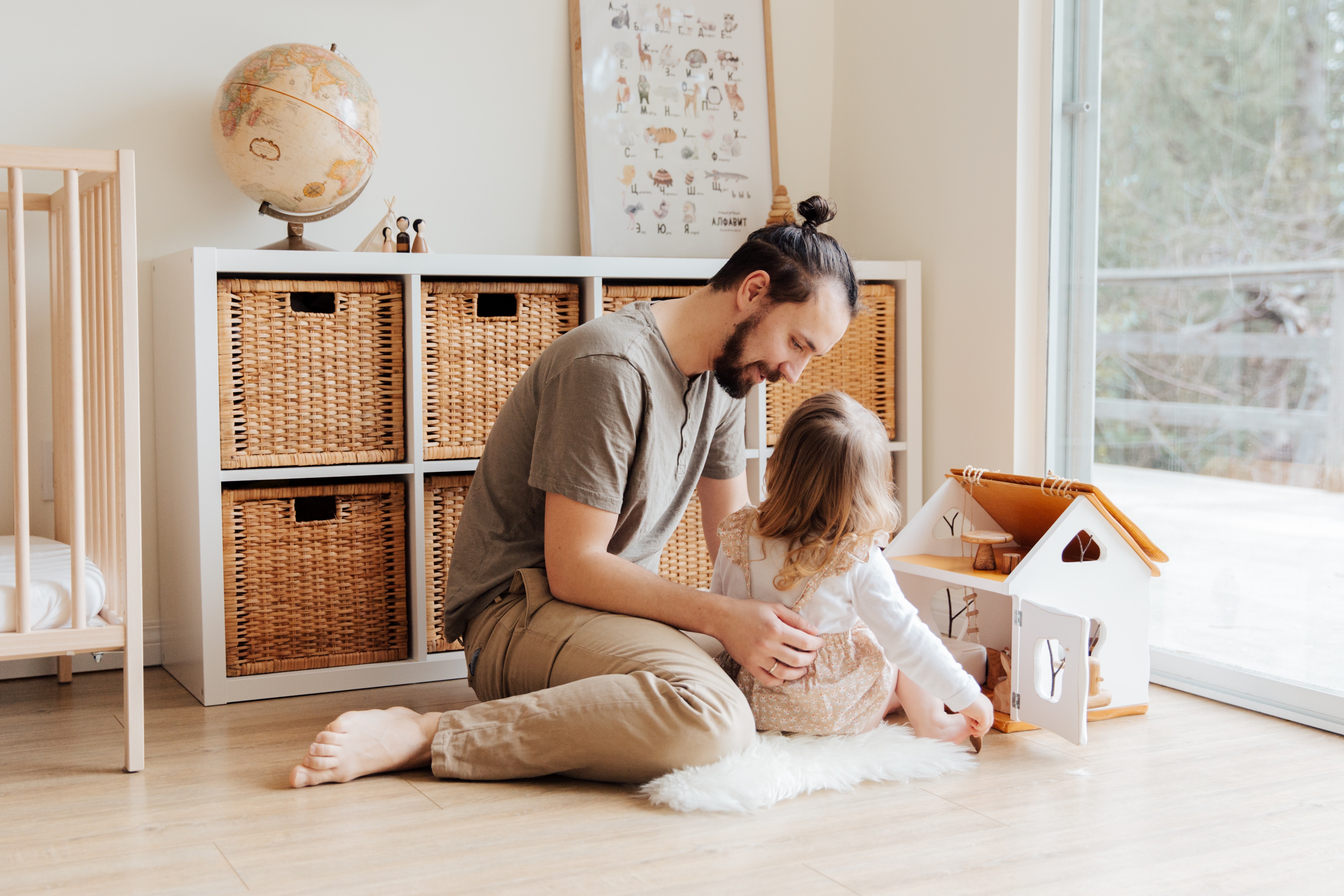
Early language grows through repeated, meaningful interactions. Parents do not need special flashcards or long “teaching sessions.” The best opportunities are often already happening during play, meals, bath time, dressing, and books.
Use short, repeatable models
Instead of asking many questions, model simple words that match what your child is doing: “up,” “go,” “open,” “more,” “ball,” or “mama.” Repetition makes it easier for a child to notice and eventually imitate the word.
Wait after you model
A short pause gives your child time to respond with a sound, gesture, look, or word. Communication attempts count even when they are not yet clear words.
Follow the child’s interests
If your child is fascinated by cars, water, animals, or opening containers, use those interests to create many natural opportunities for communication.
This information is educational and does not replace an individualized evaluation by a qualified professional.