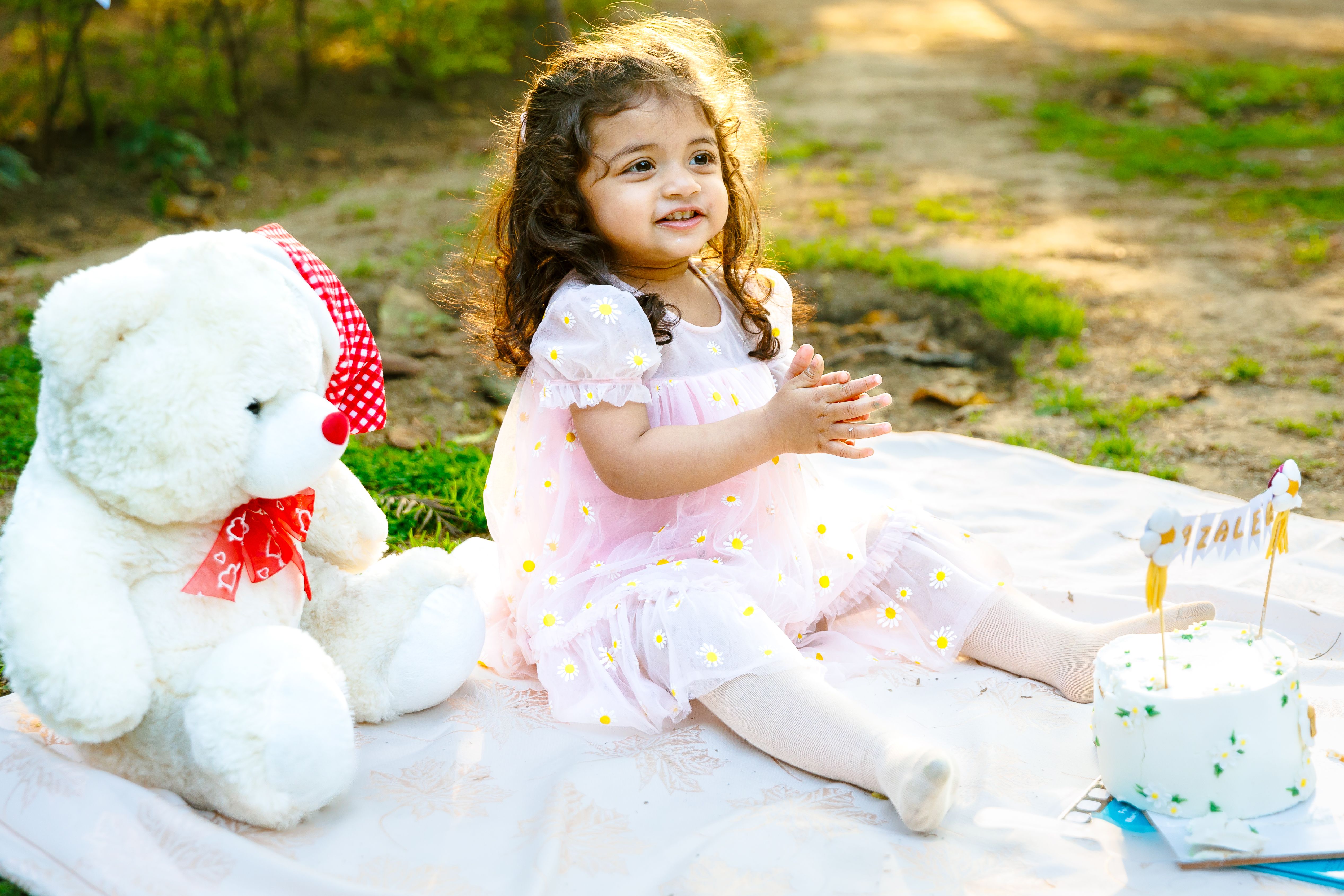
One of the milestones parents often wait for most eagerly is their child’s first word.
For some children, it comes early. For others, it takes a little longer. And when a toddler isn’t talking yet, parents naturally begin to wonder: Should my child be saying more?
There is a wide range of typical development, but there are also important communication milestones that can help us understand whether a child’s speech and language skills are developing as expected.
When do babies usually say their first word?
Many children begin saying their first meaningful word around 12 months of age.
Before that, babies often spend months experimenting with sounds. You may hear repeated strings such as “mamama,” “bababa,” or “dadada.” At first, these are usually babbling rather than true words.
A sound begins to function more like a word when your child uses it consistently, intentionally, and with a specific meaning.
For example, saying “mama” while looking for or calling their mother is different from repeating “mamama” during play.
As toddlers develop, their vocabulary gradually expands. Early words often include the names of familiar people, favorite foods, toys, animals, and everyday actions.
What actually counts as a first word?
A first word does not need to sound perfectly adult-like.
Young children are still learning how to coordinate all the movements necessary for speech, so their early productions may be simplified.
These can all count as meaningful words when they are used independently and consistently:
- A recognizable word such as “Mama,” “ball,” or “go”
- A word approximation, such as “ba” for
ball
- An animal sound such as “moo”
- An environmental sound such as “beep-beep”
- A meaningful expression such as “uh-oh”
- A consistent sign or gesture used to communicate a specific message
The important question is not simply, Did the child pronounce the word correctly? Instead, consider whether your child is using a sound, word, or sign intentionally to communicate something.
What are some common early words?
Children often learn words that are useful and meaningful in their everyday lives.
Examples might include:
- Mama
- Dada or Papa
- Ball
- Car
- Dog
- Baby
- Milk
- Water
- More
- Go
- Eat
- Help
- Hi
- Bye
- No
- Stop
- Uh-oh
A toddler may initially say only part of the word. “Ba” might mean ball, or “nana” might mean banana. Clear adult pronunciation is not required for a word to be meaningful.
Communication begins before first words
Speech does not suddenly appear at 12 months.
Before children begin talking, they develop several important prelinguistic communication skills. These early skills provide the foundation for later speech and language development.
Gestures and pointing
Babies begin communicating long before they can talk.
They may reach, wave, lift their arms to be picked up, point toward something interesting, or gesture toward something they want.
Pointing is especially important because it allows a child to direct another person’s attention.
For example, a toddler may point toward an airplane in the sky, then look toward their parent. Even without a word, the child is communicating: Look at that!
Joint attention
Joint attention occurs when a child and another person share attention toward the same object or activity.
A child might look at a toy, look toward their parent, and then look back at the toy.
These moments of shared attention are extremely important for language learning because children learn words during interactions with other people.
Imitation
Children learn through imitation.
Before copying words, they may imitate:
- Clapping
- Waving
- Facial expressions
- Actions with toys
- Animal sounds
- Simple speech sounds
Imitation helps children learn the back-and-forth pattern involved in communication.
Purposeful play
Play is another important part of communication development.
During the end of the first year, children typically begin using toys more purposefully. Instead of only mouthing or banging an object, they may push a car, stack blocks, place pieces into a puzzle, or pretend to feed a doll.
These early play skills support language development because children are learning relationships between actions, objects, people, and outcomes.
How can parents encourage first words?
Parents do not need special materials or complicated exercises to support language development. Many of the best opportunities happen during everyday routines.
1. Talk about what your child is doing
Use simple language to describe what your child sees, hears, and does.
During snack time you might say:
“Banana.”
“Cut banana.”
“Yummy banana!”
During bath time:
“Water.”
“Wash hands.”
“Splash!”
Children benefit from hearing useful words repeatedly in meaningful situations.
2. Follow your child’s interests
Children are usually more likely to learn language when the words relate to something they already care about.
If your child is watching a dog outside, that may be a better opportunity to say “dog,” “big dog,” and “dog running” than redirecting them to a completely different activity.
Following a child's attention makes language easier to connect with meaning.
3. Read together
Books expose children to vocabulary they may not hear during everyday routines.
With very young children, you do not need to read every sentence on the page.
Instead, point to pictures, name objects, make sounds, and talk about actions.
For example:
“Dog!”
“Dog running.”
“Big dog.”
“Woof woof!”
Repeating important words is helpful.
4. Encourage imitation without pressure
Try simple actions and sounds your child can copy.
You might:
- Clap your hands
- Tap a drum
- Push a car while saying “vroom”
- Make an animal sound
- Say “pop!” while popping bubbles
The goal is to make imitation playful rather than turning it into repeated testing.
5. Give your child opportunities to communicate
It can be tempting to anticipate everything your toddler needs.
Instead, occasionally create a natural reason for your child to communicate.
For example, give a small amount of a favorite snack and wait before offering more. Your child may look at you, reach, point, make a sound, sign, or attempt a word.
Respond to the communication attempt and model the word:
“More!”
This helps your child learn that communication has an effect.
When should parents consider a speech-language evaluation?
Children develop at different rates, so one milestone by itself does not provide the whole picture.
However, if a child is around 15 months old and has not yet developed a meaningful first word, or if other communication skills also seem delayed, it is reasonable to discuss the concern with your pediatrician or a speech-language pathologist.
It can also be helpful to seek advice if you notice concerns with skills such as:
- Limited gestures or pointing
- Limited attempts to communicate wants or interests
- Difficulty imitating actions or sounds
- Limited shared attention with adults
- Very little babbling or sound play
- Difficulty understanding simple everyday language
- Loss of previously acquired communication skills
A speech-language evaluation looks at much more than the number of words a child says. We also consider understanding of language, gestures, play, social communication, speech sounds, imitation, and the different ways the child communicates.
What if my child understands everything but isn’t talking?
This is a common concern.
Some toddlers appear to understand a great deal but use relatively few spoken words. In some cases, receptive language—the ability to understand language—is developing more strongly than expressive language, or the ability to communicate using words.
Good understanding and nonverbal communication are positive skills, but they do not necessarily mean that expressive language should be ignored if it appears significantly delayed.
An evaluation can help determine whether a child is simply developing at the slower end of the typical range or whether additional support would be useful.
A note about bilingual children
Learning two languages does not cause a language disorder.
Bilingual children may divide their vocabulary across two languages, so it is important to consider their communication skills across both languages, rather than judging their development based on only one.
Parents should continue speaking the language or languages they are most comfortable using with their child. Rich, natural communication with family members is more valuable than reducing a child’s language exposure because of concerns about bilingualism.
When in doubt, look at the whole child
The first word is exciting, but it is only one part of early communication development.
Pointing, gestures, eye gaze, shared attention, imitation, understanding language, play skills, and attempts to interact with other people all provide important information.
If you are concerned about your toddler’s speech or language development, an evaluation with a speech-language pathologist can help clarify where your child is developmentally and whether therapy or parent guidance would be beneficial.
This information is educational and does not replace an individualized evaluation by a qualified professional.